News
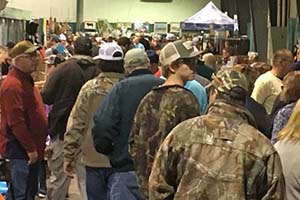
Georgia Wildlife Federation Cancels 2020 Buckarama Amid Covid Concerns
Covington, GA – In response to an increase in COVID-19 activity in Georgia and realizing that a safe, healthy environment cannot be provided for patrons, Georgia Wildlife Federation (GWF) announces the 2020 Buckarama scheduled for August at the Georgia National...
read more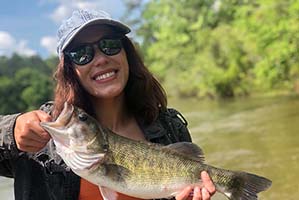
Shoal Bass to be Designated as Official Georgia State Riverine Sport Fish
By Gina Rogers, Director of Operations, Georgia Water Coalition Have you ever caught a Shoalie? They are some kind of fun to catch – they strike hard, jump high, and put up a great fight. Shoal bass are...
read more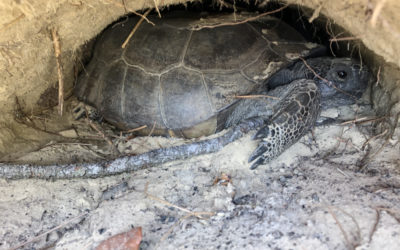
Gopher Tortoise – Building a House for 360+ Species
By: Ashlyn Halseth Being the only native tortoise in the entire southeast, it is no shock that the Gopher Tortoise (Gopherus polyphemus) is known for playing a big role in their ecosystem. In fact, their presence within their native range is so crucial, that they...
read more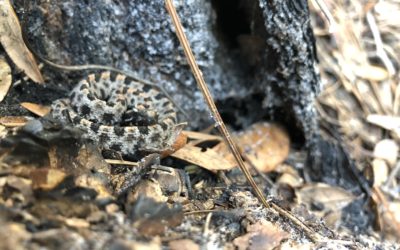
Pigmy Rattlesnake- The Little Ground Rattler
By: Ashlyn Halseth Pigmy rattlesnakes (Sistrurus miliarius) are found all over the Southeastern United States. Known for their mid-dorsal spots that range from black to reddish-brown, this snake is one of the six venomous snakes native to Georgia (eight if you include...
read more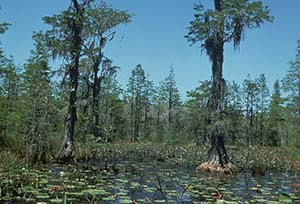
Major Win for Conservation in U.S. Senate with Passage of the Great American Outdoors Act
The Great American Outdoors Act (S.3422) passed the U.S. Senate this week with a strong bipartisan vote of 73-25. The Act will provide full, permanent funding for the Land and Water Conservation Fund (LWCF). Funded through oil and gas revenues from the Outer...
read more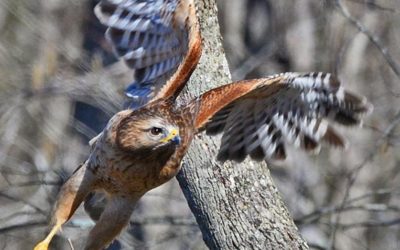
The Red-shouldered Hawk – Dancing for their Date
By: Ashlyn Halseth The Red-shouldered Hawk (Buteo lineatus) is a medium-sized raptor found almost all-over North America. This one species of bird is divided into five subspecies, with four along the east coast, and one along the west. Most researches use...
read more
Introducing College Students to Hunting and Shooting through Academics Afield
We just finished summarizing results from the first couple of semesters of Academics Afield, a GWF program that introduces college students to hunting and shooting developed in partnership with NSSF’s +ONE Movement. Here are some of the highlights. Hosted ten...
read more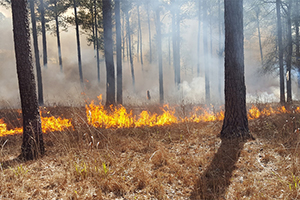
Habitat Management Tools of the Trade: Drip Torch
By: Evan Wheeler, Private Lands Biologist Early succession plant communities dominated by grasses and forbs provide a critical habitat component for a variety of wildlife species in the Southeastern United States. However, fire suppression efforts, accompanied by land...
read more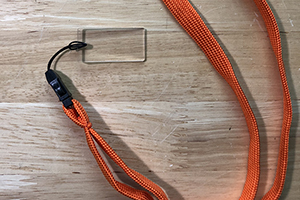
Habitat Management Tools of the Trade: Wedge Prism
By: Evan Wheeler Wedge prisms are used to estimate the basal area (total cross-sectional area of tree stems in a forest stand [usually presented in ft2/acre]) of a forest stand and are readily available to private landowners and managers for a cost of about $33-90....
read more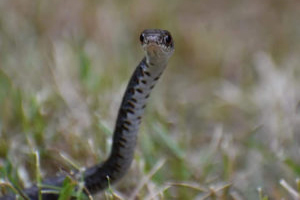
The Snake with the Misleading Name
By: Ashlyn Halseth The black racer (Coluber constrictor) is a non-venomous snake found all over North and South America’s east coast. Once an adult, the black racer develops its smooth black scales and often a charismatic white/gray chin. Black racers are commonly...
read more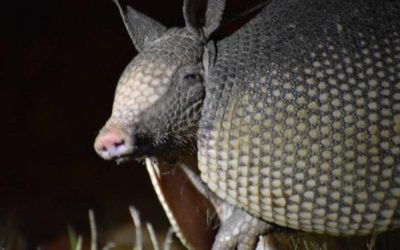
Nine-banded Armadillo: Protected from Nose to Tail
By: Ashlyn Halseth The nine-banded armadillo (Dasypus novemcinctus) is a mammal that thrives off the expansion and relocation of humans. They once were limited on their ability to migrate by America’s large rivers and lack of temperate habitat; however, while people...
read more
Academics Afield Expands to Georgia Southern University
Covington, GA – GWF is expanding our Academics Afield program to Georgia Southern University thanks to continued support from the National Shooting Sports Foundation. “Georgia Southern is a perfect fit for Academics Afield with the Shooting Sports Education Center...
read more